US Politics
Trump Administration Tightens Legal Immigration for Spouses of U.S. Citizens, Straining Families
By Staff · July 7, 2026
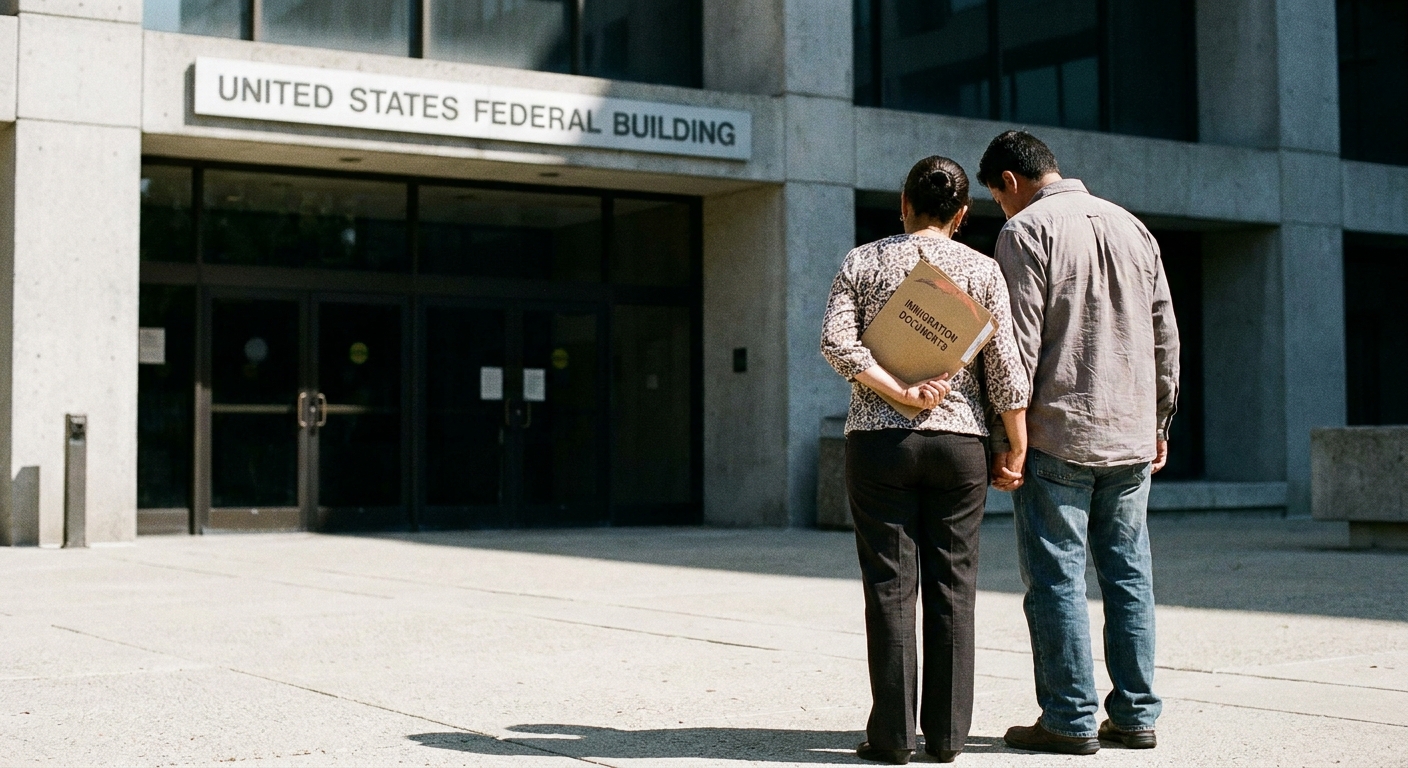
Viktor Korol walked into a San Diego immigration office with his wife for what should have been the final step in a straightforward legal process: approving her green card as the spouse of a U.S. citizen. Instead, ICE officers detained Viktoriia Bulavina, a Ukrainian refugee with Temporary Protected Status, at the mandatory appointment designed to finalize her lawful status. The Trump administration has expanded its immigration crackdown to include spouses of U.S. citizens, targeting one of the most protected legal immigration pathways. Over 100,000 spouses and minor children of U.S. citizens and legal permanent residents are estimated to be affected. Historically, spouses of U.S. citizens were a special exempt category unaffected by immigration quotas and could adjust residency even without maintaining perfect legal status; the Trump administration now treats them like all other immigrants.
Visa Pauses, Interview Delays, and Heightened Scrutiny
On January 21, 2026, the administration suspended processing and issuance of immigrant visas for nationals of 75 countries, based on an assessment that citizens from these nations are likely to require public assistance. Spouses of U.S. citizens are not exempt. The list includes Afghanistan, Albania, Algeria, Bangladesh, Brazil, Cambodia, Colombia, Cuba, Egypt, Ethiopia, Guatemala, Haiti, Iran, Iraq, Jamaica, Jordan, Lebanon, Morocco, Nepal, Nicaragua, Nigeria, Pakistan, Russia, Somalia, Syria, Thailand, Uganda, Uruguay, and dozens more. The pause is estimated to ban approximately 70% of legal permanent immigrants based on 2024 statistics. Cases involving spouses from countries like Iran and Venezuela are effectively frozen indefinitely due to expanded travel holds.
On May 21, 2026, USCIS issued a policy memorandum characterizing adjustment of status as an extraordinary discretionary benefit rather than a routine pathway, raising the bar for green card approvals inside the United States and reaffirming a preference for consular processing abroad. The memo warns that applicants who overstayed their nonimmigrant admission or parole are now unlikely to be allowed to adjust status domestically. A pending or approved marriage petition does not confer legal status under the new policy, and remaining beyond permitted stay can lead to enforcement action, including detention and referral to removal proceedings. Denied applications are referred directly to immigration court.
The administration has largely stopped waiving interviews for marriage-based green card applicants, meaning nearly all spouses must now attend longer, more intensive in-person interviews. Under enhanced vetting, officials evaluate English proficiency, financial stability including credit and savings, health conditions, and work history—not just the I-864 income threshold required by law. USCIS officials also review social media accounts and conduct thorough background checks.
The Human and Economic Toll
Multiple spouses of U.S. citizens—including a British mother, a Ukrainian refugee, and the spouse of a Navy veteran—have been apprehended by ICE during what were expected to be routine marriage-based green card interviews. The British mother was detained in San Diego with her baby and freed nearly a week later after her green card was approved. The Navy veteran's spouse was arrested and released on bond but must navigate her case in immigration court. Similar detentions of military spouses have occurred in Dallas, El Paso, and New Orleans, with at least three military spouses detained in recent months. All four individuals detained at San Diego green card interviews had overstayed their visas but were legally eligible for green cards as immediate relatives of U.S. citizens, a status typically exempted by Congress.
Processing times for spousal green cards have stretched from about 14 months under Biden to nearly two years under Trump. Consular processing for U.S. citizens sponsoring spouses currently takes 12 to 14 months on average, while green card holders face 12 to 36 months.
Immigration lawyer Flavia Santos Lloyd reported that her phone began to ring incessantly with anxious clients concerned about the repercussions of the new rule. Immigration attorney Elizabeth Ricci said the policy changes have caused tremendous confusion, noting that while adjustment in the country has always been discretionary, now people must show why they should be allowed to remain. Attorneys warn that heightened discretionary standards, mandatory in-person interviews, and more aggressive denials could leave couples separated for extended periods while cases are processed overseas.
A Betrayal of the Legal Framework
USCIS spokesperson Matthew J. Tragesser stated that apprehensions occur when individuals are identified with outstanding removal orders or have committed crimes—but the documented detentions involved individuals legally eligible for green cards without criminal records or removal orders.
The American Immigration Council stated that these policies openly discriminate against people on the basis of where they were born, not the content of their character or their individual circumstances. The council characterized the administration's approach by saying it is dismantling legal immigration pathways wholesale. An immigration attorney observed that these policies send a clear anti-immigrant message aimed at intimidating undocumented immigrants into self-deportation.
In June 2026, a federal court struck down USCIS's indefinite suspension of immigration benefits for nationals of 39 countries, ordering the agency to restart processing of naturalization, green cards, work permits, and visa petitions. Civil and immigrant rights groups have launched a separate lawsuit challenging the State Department's ongoing pause on immigrant visa issuance for nationals of 75 countries, arguing the policy unlawfully targets large portions of the globe.
The Social Contract Under Strain
The policies represent a fundamental shift in how the government treats citizens' rights to form families. By reframing adjustment of status as an extraordinary discretionary benefit—rather than a routine legal pathway established by Congress—the administration has turned what was understood as a right into a privilege subject to executive whim. Indefinite visa pauses, mandatory interviews with heightened vetting, and ICE enforcement at routine appointments amount to the exercise of arbitrary state power over families who followed every legal requirement. The detention of military spouses and individuals with lawful status like Temporary Protected Status signals that no category of lawful immigrant family member is safe.
When following every rule still leaves families separated, detained, or deported, the premise that lawful pathways offer predictable, rule-based outcomes collapses—and the administration sets a precedent for state authority over the most intimate dimensions of private family life.