US Politics
The 2026 Senate Map: Can Democrats Flip the Chamber, and What Would It Mean for Policy?
By Staff · July 3, 2026
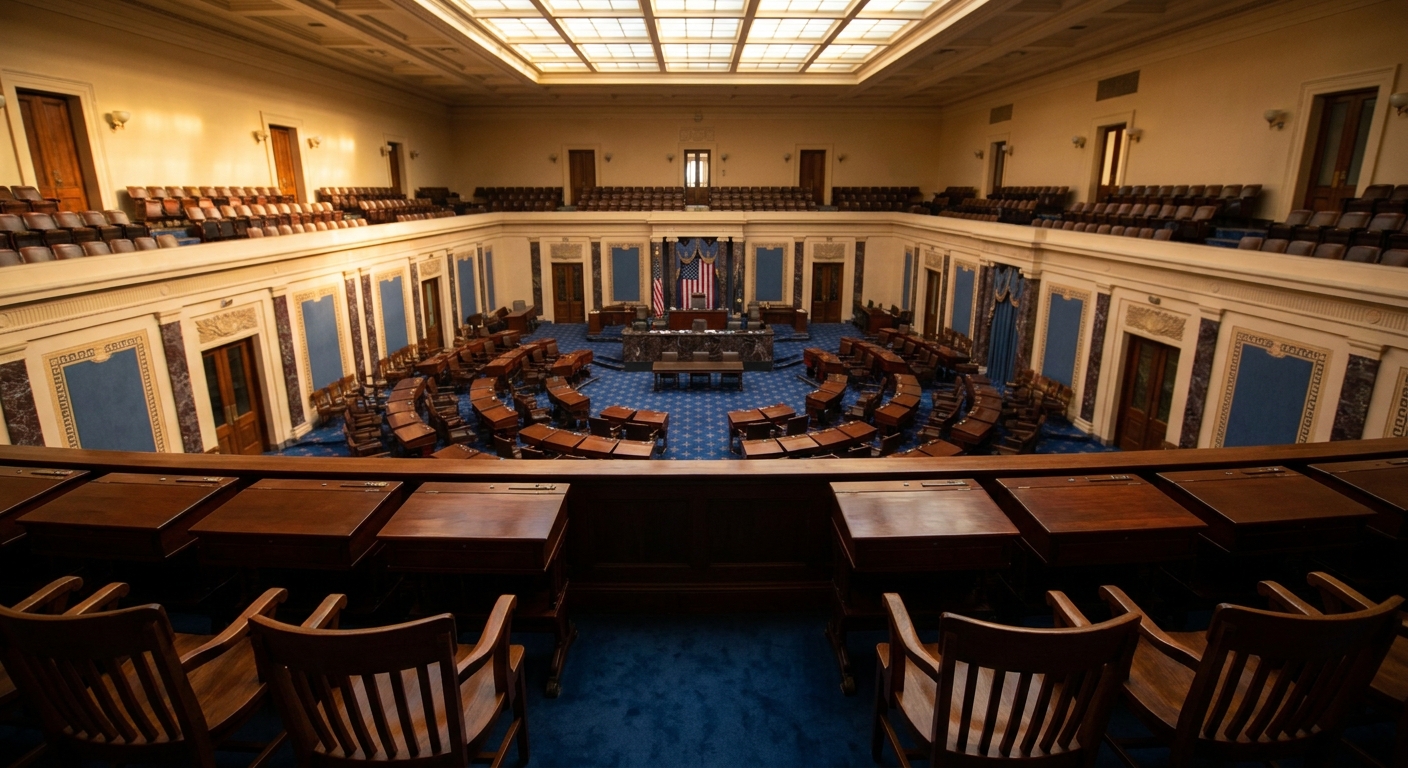
Democrats need to flip four Senate seats in 2026 to reclaim the majority—and every one of those pickups must come from Republican territory while they lose none of their own. New state-level polling shows them within striking distance in Maine, Texas, North Carolina, and Iowa, but the margin for error is zero. Republicans currently hold a 53-47 majority heading into the midterms.
What hangs in the balance isn't just partisan scorekeeping. It's whether the next two years bring legislation on healthcare costs, voting rights, and economic security—or whether those priorities die in a Republican-held chamber. These races test whether economic populism and democratic accountability can overcome the Senate's structural Republican advantages.
The Math Is Unforgiving
There are 35 Senate seats on the ballot in 2026: 22 held by Republicans, 13 by Democrats. Democrats' best pickup opportunities are concentrated in North Carolina and Maine, with Alaska, Ohio, Iowa, and Texas as secondary targets requiring a strong national environment. At the same time, they must defend Sen. Jon Ossoff in Georgia, considered the most vulnerable Democrat up for reelection, where he faces Republican Rep. Mike Collins. A late-June Beacon Research/Shaw & Co. survey of registered voters in Georgia showed Ossoff ahead of Collins 56% to 43%. Ossoff enters the general election with a massive fundraising edge and a more established campaign operation, but any loss in Georgia would make the path to a majority nearly impossible even if Democrats flip Republican seats.
The Economic Populist Bet
Democrats are linking their Senate strategy to policy promises including lowering healthcare costs and protecting democracy and voting rights. Ohio voters aged 50 and older identify affordability, Social Security, and Medicare as decisive issues in the 2026 Senate race.
Roy Cooper, running in North Carolina, frames healthcare costs as central to his campaign. "One reason that I'm running for the U.S. Senate is, stuff just costs too much. And a large contributor that is healthcare costs," he says. Cooper also declares that "Healthcare should be something basic that people get," pointing to his record expanding Medicaid to more than 690,000 North Carolinians as proof he can tackle healthcare in the Senate.
In Maine, Graham Platner frames his challenge to Susan Collins around economic populism: "I'm running to reclaim this seat for working Mainers, to create a government that serves working individuals, for working individuals." His campaign focuses on lowering costs for the middle class and challenging the influence of billionaires and large corporations in politics.
Mary Peltola in Alaska released a sweeping affordability plan targeting high costs for fuel, groceries, childcare, housing, healthcare, and energy, including proposals to ban price gouging during emergencies. More broadly, Democrats are debating economic-populist strategies to regain working-class support, including proposals for government-produced medications, first-time homebuyer incentives, and regulated childcare costs.
North Carolina: Democrats' Best Shot
North Carolina is emerging as a top Democratic pickup opportunity, with the University of Virginia Center for Politics shifting the race rating from toss-up to Lean Democratic in June 2026. Former Governor Roy Cooper is leading Republican Michael Whatley in polling for the state's open Senate seat, created by Sen. Thom Tillis's retirement.
Cooper polled at 49.8% to Whatley's 38.7% in May 2026, an 11.1-point lead that has expanded from earlier surveys. Decision Desk HQ's polling average showed Cooper leading 48%-41%.
Cooper's opening comes from his credibility on both economic and social issues: he expanded Medicaid as governor and vetoed an extreme abortion ban while signing an executive order to protect providers and patients from out-of-state attacks. The challenge: Cooper must maintain enthusiasm in a state where Republicans still have deep organizational strength and turnout advantages in non-presidential years.
Maine: A True Toss-Up
Maine's Senate race between Republican incumbent Susan Collins and Democrat Graham Platner is effectively a toss-up, with different polls showing each candidate with narrow leads within the margin of error. A mid-June Tavern Research poll of likely voters found Platner ahead 52%-48%. Decision Desk HQ's late June average had Collins up by 1 point, while RealClearPolitics' average had Platner up by less than a point.
Platner's policy priorities include universal healthcare, defending democracy and the Constitution, and building long-term political power to achieve goals like Medicare for All. The challenge: Collins remains personally popular with a decades-long reputation for bipartisanship, making this a race where Platner must persuade voters that economic representation matters more than incumbent familiarity.
Texas: A Republican Crack-Up?
The 2026 Texas Senate race is extremely competitive after Attorney General Ken Paxton defeated Sen. John Cornyn in the Republican primary runoff in May 2026. A late-June Texas Public Opinion Research poll showed Democrat James Talarico at 47% and Paxton at 44%, with 7% undecided. A New York Times/Siena poll found Talarico and Paxton tied at 47% among likely voters.
Talarico's opening comes from Republican disunity and demographic shifts: he holds a 27-point lead among independents and pronounced support among Hispanic voters and women. Only 44% of GOP runoff voters who supported Cornyn currently say they will back Paxton in November, creating a Republican unity crisis.
The challenge: Texas remains structurally Republican, and Democrats have repeatedly fallen short in statewide races despite promising early polling—Talarico must convert Paxton's weaknesses into actual votes in a state that hasn't elected a Democratic senator since 1988.
Ohio: The Populist Returns
Ohio's Senate race features Democrat Sherrod Brown running against Republican incumbent Jon Husted, with Brown a former senator seeking to return to the chamber. A June 2026 AARP poll shows Brown narrowly leading Husted 48%-45%. Polymarket's prediction market shows Brown favored at 56% versus Husted at 46%.
Brown's opening comes from his economic populist brand and appeal to older voters on Social Security and Medicare issues that resonate in Ohio's aging electorate. The challenge: Ohio has trended sharply Republican in recent cycles, and Brown must overcome the state's rightward shift while Husted benefits from incumbency.
Iowa and Alaska: Everything Must Break Right
Iowa's Senate race is competitive following Sen. Joni Ernst's retirement, with an open seat that Democrats see as newly winnable despite the state's Republican lean. An April 2026 Echelon Insights poll showed both Democratic candidates edging Republican frontrunner Ashley Hinson by about two points. More than $29 million has already been spent in the race, with major outside groups including VoteVets and Senate Majority PAC investing heavily in what they see as a surprise opportunity.
The challenge: the state has moved sharply Republican in recent elections, and Democrats need both strong economic messaging and favorable national conditions to overcome structural disadvantages.
Alaska's Senate race between Republican incumbent Dan Sullivan and Democrat Mary Peltola is highly competitive, with June polls showing alternating narrow leads. An early-June Alaska Survey Research poll found Peltola ahead 49%-44%. A late-June New York Times/Siena poll showed Sullivan up 47%-45%.
The challenge: Sullivan is an established incumbent, and Democrats need Peltola's personal appeal and affordability message to overcome partisan gravity in a state that leans Republican in federal races.
What a Democratic Majority Would Mean
A Democratic Senate majority would enable the party to advance economic relief legislation focused on lowering healthcare costs, expanding access to prescription drugs, and addressing affordability crises.
Michigan Senate Democrats have advanced a Health Care You Can Afford agenda creating a state-based insurance exchange with a reinsurance pool and establishing a Prescription Drug Affordability Board—models Democrats could scale nationally with Senate control. Delaware's Democratic-led Senate advanced bills to expand hospital financial assistance for patients up to 300% of the federal poverty line and restrict private equity acquisitions of nonprofit acute-care hospitals, showing the kind of healthcare reforms Democrats would pursue.
Democratic Senate control would also enable legislation protecting voting rights, provide checks on executive power, and shape foreign policy through advice and consent on appointments and treaty ratifications. A Republican hold would likely mean continued gridlock on Democratic priorities or further conservative policy consolidation on healthcare, regulation, and judicial appointments.
The Senate's Structural Tilt
Republicans hold a built-in structural advantage in Senate elections because more states lean Republican than Democratic, particularly less populous rural states. The GOP is rated as reliably dominant in 21 states versus Democrats in only 14, giving Republicans a starting floor of 42 Senate seats to Democrats' 28. The Senate is 6-7 percentage points more conservative than the nation overall, meaning Republican Senate representation is often approximately 7% higher than their share of national Senate votes. Democrats' support is concentrated in large, populous states like California and New York, meaning they win fewer Senate seats despite potentially winning more national votes.
Democrats are betting that kitchen-table economics and democratic accountability can win in states where those structural advantages have historically limited Democratic power. The outcome will determine not just which party controls the Senate, but whether the chamber becomes more responsive to voters' economic anxieties—or whether geography continues to insulate one party from national sentiment.