Labor & Employment
Unions Go to Court to Block USDA Downsizing, Testing Legal Limits of Federal Workforce Cuts
By Staff · July 13, 2026
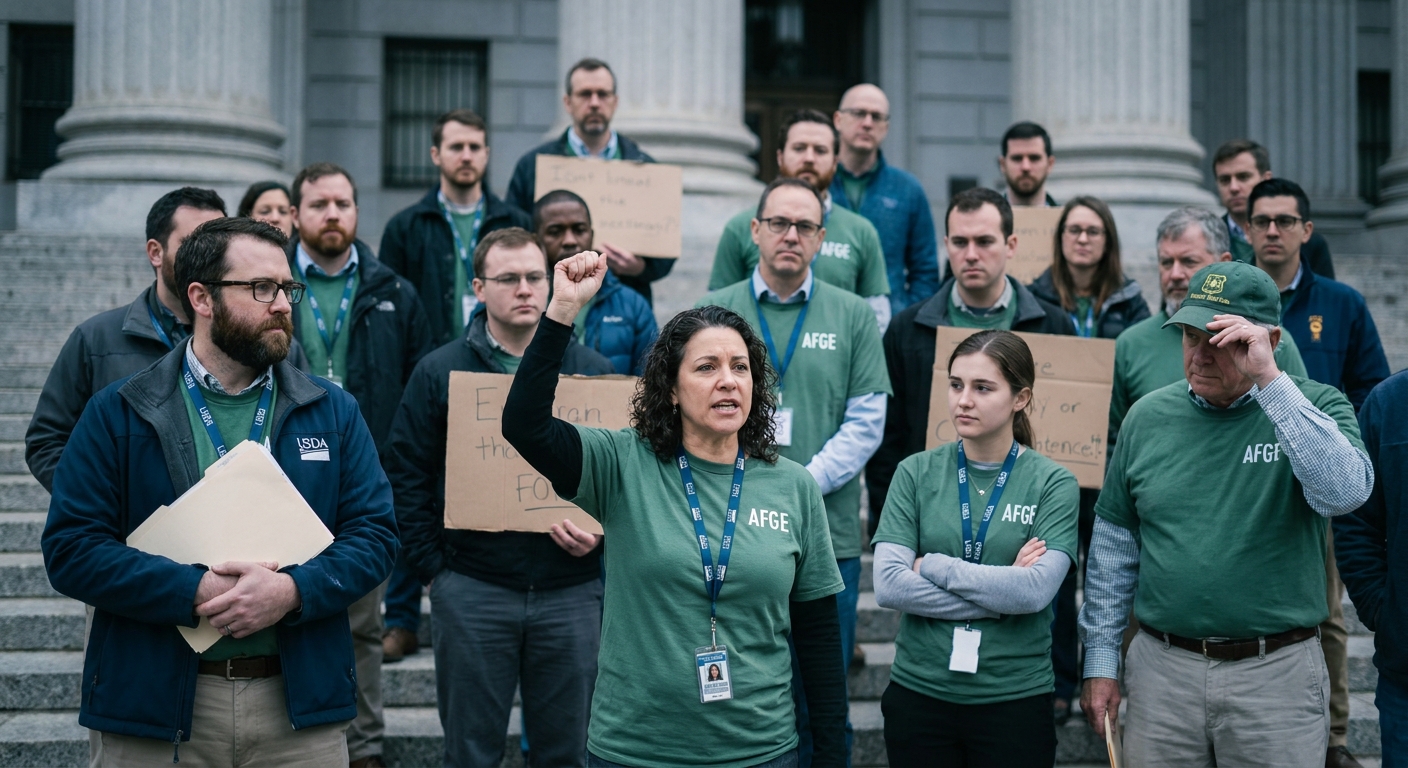
On July 1, 2026, a coalition of federal employee unions, nonprofits, and U.S. municipalities filed a motion for a preliminary injunction in federal court to halt the Trump administration's reorganization and downsizing of the U.S. Department of Agriculture. The filing—a second supplemental complaint in the ongoing case AFGE v. Trump in the U.S. District Court for the Northern District of California—asks the court to freeze USDA's restructuring plans while the lawsuit challenging their legality proceeds.
At its core, the dispute poses a fundamental question: can federal labor law force the executive branch to follow collective bargaining procedures before reshaping agencies, or does presidential authority to reorganize override those protections? The American Federation of Government Employees leads the coalition challenging the reorganization.
The Scale of the Proposed Restructuring
The USDA reorganization plan would reduce the workforce by approximately 23,177 employees, a 23% overall cut. USDA's workforce has already dropped from 98,000 in 2024 to 77,500 due to terminations and voluntary exits. The plan proposes moving approximately 2,600 Washington-based employees to five regional hubs—Raleigh, Kansas City, Indianapolis, Fort Collins, and Salt Lake City—with the Forest Service headquarters relocating to Salt Lake City by summer 2027. Agencies affected include the Economic Research Service, the National Institute of Food and Agriculture, the Agricultural Research Service, and the National Agricultural Statistics Service. The reorganization also proposes closing the Beltsville Agricultural Research Center and eliminating ARS Area Offices and NASS regional field offices, consolidating functions into the five hub locations.
Internal USDA planning documents confirm the reorganization aims to reduce the workforce by compelling employees to quit through geographic reassignments rather than conducting formal layoffs. The unions argue this amounts to a disguised Reduction in Force designed to downsize the agency without congressional approval.
The requested injunctive relief includes blocking USDA from reorganizing, downsizing, closing, moving, or consolidating offices; stopping the issuance of relocation notices; and preventing the removal of employees who declined relocation.
Everett Kelley, National President of AFGE, said: "Forcing federal employees to move thousands of miles away just to keep their jobs has nothing to do with making USDA operations more efficient or responsive to the public—in fact, it will have the opposite effect, as most workers will quit a job they love rather than uproot themselves and their families."
The Legal Framework: Collective Bargaining as a Check on Executive Power
To win a preliminary injunction—a court order that freezes the status quo while a lawsuit proceeds—plaintiffs must show they are likely to succeed on the legal merits, will suffer irreparable harm without the injunction, the balance of hardships favors them, and an injunction serves the public interest.
Federal employees have a legal right to collective bargaining established by the Federal Service Labor-Management Relations Statute, which allows them to form unions and bargain over their conditions of employment, with collective bargaining agreements superseding agency policies, OPM policies, and executive orders. Workforce reductions are a mandatory subject of bargaining, meaning agencies must bargain about the decision's effects on unit employees before implementing major changes.
Union collective bargaining agreements at USDA require advance written notice to unions before changing working conditions, with at least ten business days' notice except in emergencies. Unions allege USDA skipped required mid-term bargaining over proposed changes and formal discussion notice before management meetings with employees on personnel policies or working conditions.
USDA issued a National Consultation Right memo to its two national unions (NFFE and AFGE) on August 29, 2025, requesting their review and comment on the reorganization plan. Unions submitted overwhelmingly negative feedback, citing lack of genuine consultation, concerns over workforce retention, and absence of cost-benefit or operational impact analysis. They highlighted a 2019 relocation to Kansas City that resulted in losing more than half of the staff and significant productivity drops, arguing the current plan appears arbitrary and politically motivated.
The Public Service Consequences: Food Safety and Rural Programs at Risk
Complaints about USDA meat, poultry, and egg products jumped nearly 40%, from 1,443 to 2,016, following earlier workforce cuts. USDA's Food Safety and Inspection Service experienced a 9% workforce loss. Critics warn that reduced oversight threatens the safety of the food supply, particularly for small plants and diversified farms that depend on adequate inspection. Staffing losses have created gaps in rural services, with responsibilities shifted to the state level, risking uneven enforcement and eroded public trust.
The filing argues USDA's plan harms employees and threatens essential programs relied on by farmers, families, and local governments.
Corinne Johnson, lead counsel from Altshuler Berzon representing the union coalition, said: "The actions of this administration to reorganize USDA are a ruse for forcing employees to quit because they work on programs—like feeding low-income women and children, protecting our forests or scientific research—that this administration opposes for political reasons. That is unlawful."
The union coalition legal memo states: "USDA's actions will force many experienced employees to leave, gutting programs and harming families. The harms are as certain and widespread as if USDA had imposed a large-scale RIF and cut staff directly."
A Test Case for Government-Wide Restructuring
The USDA reorganization is tied to Executive Order 14210, which directs workforce reductions across the federal government, and an implementing OMB/OPM memorandum. The AFGE v. Trump case challenges whether the executive order authorizes a massive restructuring—which historically requires Congress's approval—or merely permits minor workforce reductions that Presidents can execute without legislative authorization. Plaintiffs warn that insufficient staffing will jeopardize school food programs, disaster relief, and public health responses across multiple agencies.
A court previously found that Executive Order 14210 and the OMB/OPM memorandum unlawfully terminated probationary employees across federal agencies in February 2025. Recent AFGE-led litigation has produced rulings reinforcing federal employees' collective bargaining rights and constraining attempts by agencies and the Federal Labor Relations Authority to weaken union protections, shaping precedent on how far executive branch actors can go in terminating union contracts or centralizing labor-relations authority. Legal experts note the Supreme Court's stay order allows the administration to proceed with restructuring plans while litigation continues, setting a precedent for executive action without waiting for full judicial review, though the legality of individual agency plans remains unresolved.
A ruling on the USDA injunction will signal whether collective bargaining requirements and congressional appropriations limits can effectively slow or block agency restructuring at other departments facing similar executive-directed downsizing.
The Legal Arguments: Statutory Limits Versus Executive Authority
The unions argue the reorganization violates Section 716 of USDA's fiscal 2026 appropriations bill, which bars USDA from using FY26 funds to reorganize or relocate offices or employees without advance approval from the House and Senate appropriations committees. They also argue the reorganization is arbitrary, capricious, and unauthorized by Congress, violating the separation of powers by attempting to restructure federal agencies without congressional authorization—asserting that only Congress has the authority to create, restructure, or abolish federal departments and agencies. The filing argues USDA's plan exceeds the agency's statutory authority and violates Congress's direction to preserve USDA staffing and functions.
The Trump administration's core legal defense is that the President has authority to direct agency restructuring and workforce reductions under existing executive authority, arguing that the executive order and implementing memorandum do not require congressional authorization.
Brooke Rollins, U.S. Secretary of Agriculture leading the USDA reorganization, told employees they should expect more detail on the reorganization by early summer and emphasized the department would try to be flexible with staff during relocations.
Judge Susan Illston stated in her May 22, 2025, preliminary injunction: "Agencies may not conduct large-scale reorganizations and reductions in force in blatant disregard of Congress's mandates, and a President may not initiate large-scale executive branch reorganization without partnering with Congress." The court found the administration's actions likely violated the constitutional separation of powers and the Administrative Procedure Act.
The Supreme Court's emergency order staying the lower-court injunction expressed no view on the legality of any particular agency RIF or reorganization plan, allowing the administration to proceed with restructuring while the case continues but not definitively ruling on the merits.
What Comes Next: A Decision That Will Shape Federal Workforce Law
The procedural history underscores the legal tug-of-war. Judge Susan Illston granted a two-week temporary restraining order on May 9, 2025, temporarily blocking mass layoffs and program closures across federal agencies. She then issued a preliminary injunction on May 22, 2025, blocking the Trump administration from implementing large-scale reductions in force at 22 federal agencies, including USDA. The Ninth Circuit denied the Trump administration's emergency stay request on May 30, 2025, upholding the injunction. The Supreme Court later stayed the preliminary injunction, allowing the administration to proceed with restructuring plans while the case continues.
The July 1, 2026, filing asks the court to revisit the question: should USDA's specific reorganization plan be frozen while the legal challenge proceeds, or can the administration move forward with relocations, office closures, and workforce reductions?
If the court grants the requested preliminary injunction, it would halt USDA restructuring for the duration of the lawsuit, potentially months or longer, preserving the current workforce and office structure while legal arguments are fully litigated. If the court denies the injunction, USDA would be free to proceed with relocations, office closures, and downsizing even as the underlying legal case continues.