Labor & Employment
AFL-CIO Launches Massive Union Election Volunteer Drive, Aiming for 22,500 Workers by July 3
By Staff · July 7, 2026
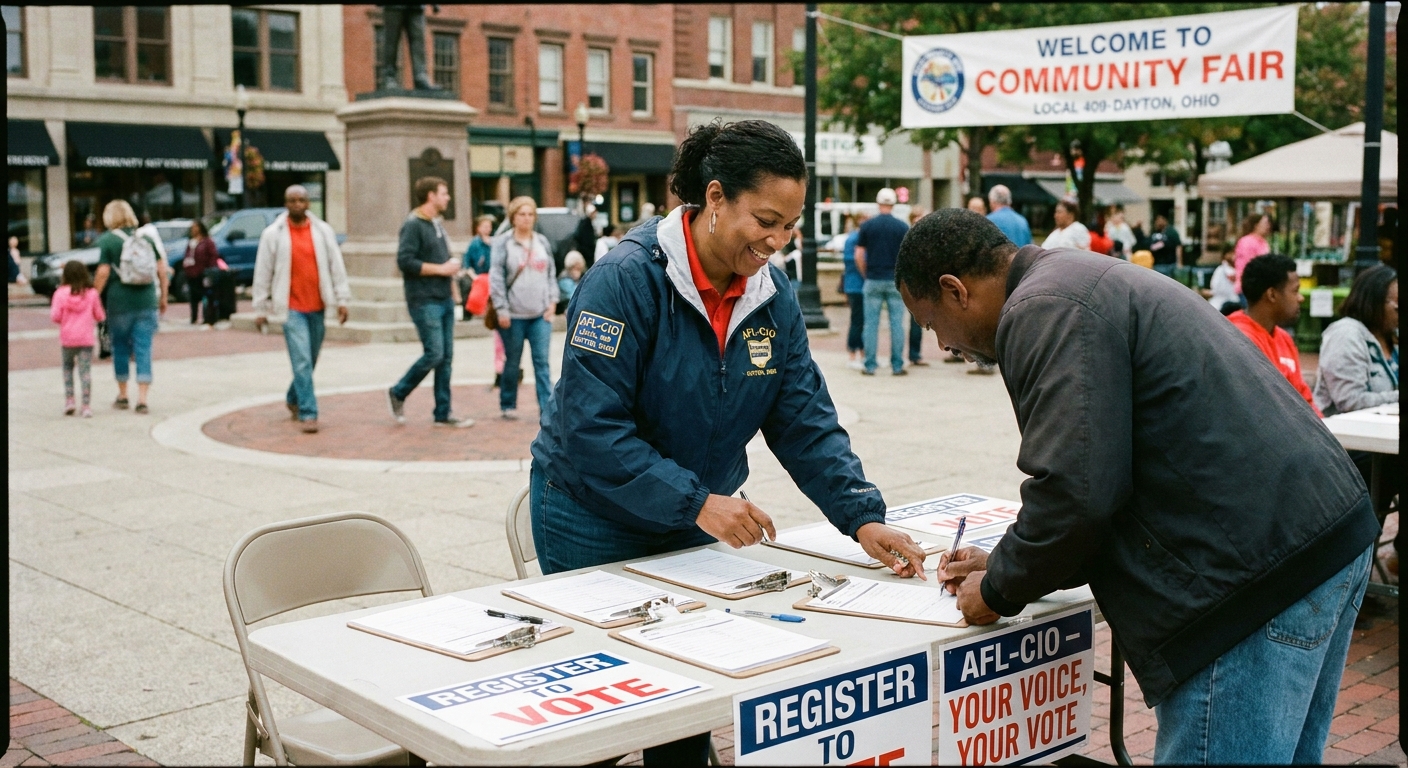
When nearly half of U.S. jurisdictions can't find enough people to staff polling places, someone has to solve the problem or democracy simply doesn't function. The AFL-CIO announced a plan at its June 2026 national convention in Minneapolis to mobilize 22,500 union members as election workers by July 3, 2026, the first stage of a broader effort to reach approximately 180,000 by Labor Day—eight times the initial target. The arithmetic is straightforward: recruit 1,500 activists by July 2-3, have each one recruit 15 more. The federation, which represents more than 12.5 million workers across 65 affiliated unions, is calling it the largest organizing drive in AFL-CIO history. AFL-CIO President Liz Shuler, re-elected at the convention, put it plainly: "This is the moment, right now, that will define our future. I feel urgency, and I feel excitement to, as we say, get this sh*t done".
The Poll Worker Crisis
Poll workers run the mechanics of voting—setting up equipment, verifying eligibility, issuing ballots, operating machines, assisting voters with disabilities, and securing materials when polls close. The shifts start early, often by 7:00 a.m., and run past 8:00 p.m. Yet 48 percent of U.S. jurisdictions reported having a very or somewhat difficult time recruiting enough poll workers for the 2024 election, even though more than 772,000 people actually served. The challenge has been persistent since 2018, with a majority of election officials reporting difficulty in every major election since; in the 2022 midterm cycle, 54.1 percent of jurisdictions faced recruitment problems.
The reasons are familiar: inadequate pay, harassment, and partisan balance requirements. The Brennan Center's 2026 survey found that 32 percent of local election officials have been threatened, harassed, or abused; more than half worry about the safety of colleagues; and a majority fear that ongoing threats will undermine their ability to retain and recruit election workers for the 2026 midterms. When shortages become severe enough, officials risk closing voting locations to properly staff others, potentially creating long lines and disenfranchising voters, particularly in rural areas. Clark County, Nevada's election department issued an urgent call in June 2026 for qualified poll workers, particularly bilingual English-Spanish, Filipino, or Mandarin speakers, to staff Election Day vote centers and early voting sites.
Labor's Answer
Into that vacuum, the AFL-CIO is bringing its Labor 2026 P.O.W.E.R. program—Protect. Organize. Win. Engage. Right Now.—the umbrella initiative for the federation's midterm mobilization. Every state federation and Central Labor Council is encouraged to recruit an additional 5 percent of workers. Beyond election staffing, the AFL-CIO plans to deploy 50,000 election protectors to monitor voting places and staff hotlines for reports of voter intimidation. The campaign will connect volunteers with nearly eight million voters across Arizona, Georgia, Michigan, Minnesota, Nevada, North Carolina, Ohio, Pennsylvania, and Wisconsin.
The strategic calculation is transparent. Union members who staff polling places and protect voting access become democracy's essential workers while simultaneously building power for candidates and policies that benefit working people. Union members already vote at higher rates than non-union workers—over 90 percent—and made up approximately 11 percent of the electorate in 2024. The AFL-CIO has set a goal to increase turnout from union households from 14 million voters in 2022 to 16 million in 2026. "This year, we're aiming to turn out 16 million voters, the most ambitious initiative we've ever undertaken," Shuler said.
A Civic Infrastructure Model
The 2026 convention featured 1,900 delegates from 65 affiliated unions who adopted resolutions committing the federation to building a worker-first democracy and forming coalitions with community partners. High union density correlates with stronger democratic outcomes, including significantly fewer voter restriction laws in states with higher union membership. Labor unions function as civic infrastructure—schools of democracy where members develop political engagement skills through workplace voice and intentional mobilization. In 2024, UNITE HERE ran the largest labor-led independent canvassing program in the country, deploying over 2,000 canvassers to knock on 4.3 million doors in ten states and hold over 500,000 individual conversations.
The convention was framed by a civil rights unity summit and a global symposium focused on solidarity, social democratic values, and combating attacks on working people and human rights. Organizers used the Wellstone Triangle framework—community organizing, electoral politics, and public policy—to connect labor strategy with broader civic engagement goals. Peter Kennedy, SMART Railroad Director, told delegates: "What we do here will chart the course for what our union will be marching towards over the next five years". AFL-CIO Secretary-Treasurer Fred Redmond has emphasized that voting rights are workers' rights and that workers want an economy and government that works for the people, not just the billionaires, demanding to be treated with dignity and self-respect.
Shuler cited defending democracy as a core reason for the mobilization, referencing threats posed by the Trump-GOP-corporate agenda to democratic laws and norms. She told the convention: "We defend our democracy… we give people hope, and we get shit done". Labor activist Dolores Huerta laid out labor's transactional expectations to political allies: "You want our votes, you want our money, you want our support? We need your commitments in advance".
The U.S. Election Assistance Commission reported in January 2026 that jurisdictions continued to struggle with poll worker recruitment despite hundreds of thousands serving, underscoring that traditional recruitment channels are insufficient. The AFL-CIO's model demonstrates how organized institutions with existing mobilization capacity can address civic infrastructure gaps at scale—providing both the human resources democracy requires and a replicable framework for future engagement.
The federation's gamble is that building democracy's physical infrastructure—the actual people who make elections run—creates durable political power while solving a problem that threatens everyone's access to the ballot. Whether that model spreads beyond organized labor depends on whether anyone else can mobilize at comparable scale. For now, when polling places need staff and no one else is stepping up, union members are the ones showing up early to make sure the doors open. That's not just political strategy. That's how civic infrastructure gets built when traditional systems fail.