Health & Wellbeing
Life on GLP-1 drugs: Patients describe fewer cravings, side effects, stigma and access barriers
By Staff · July 13, 2026
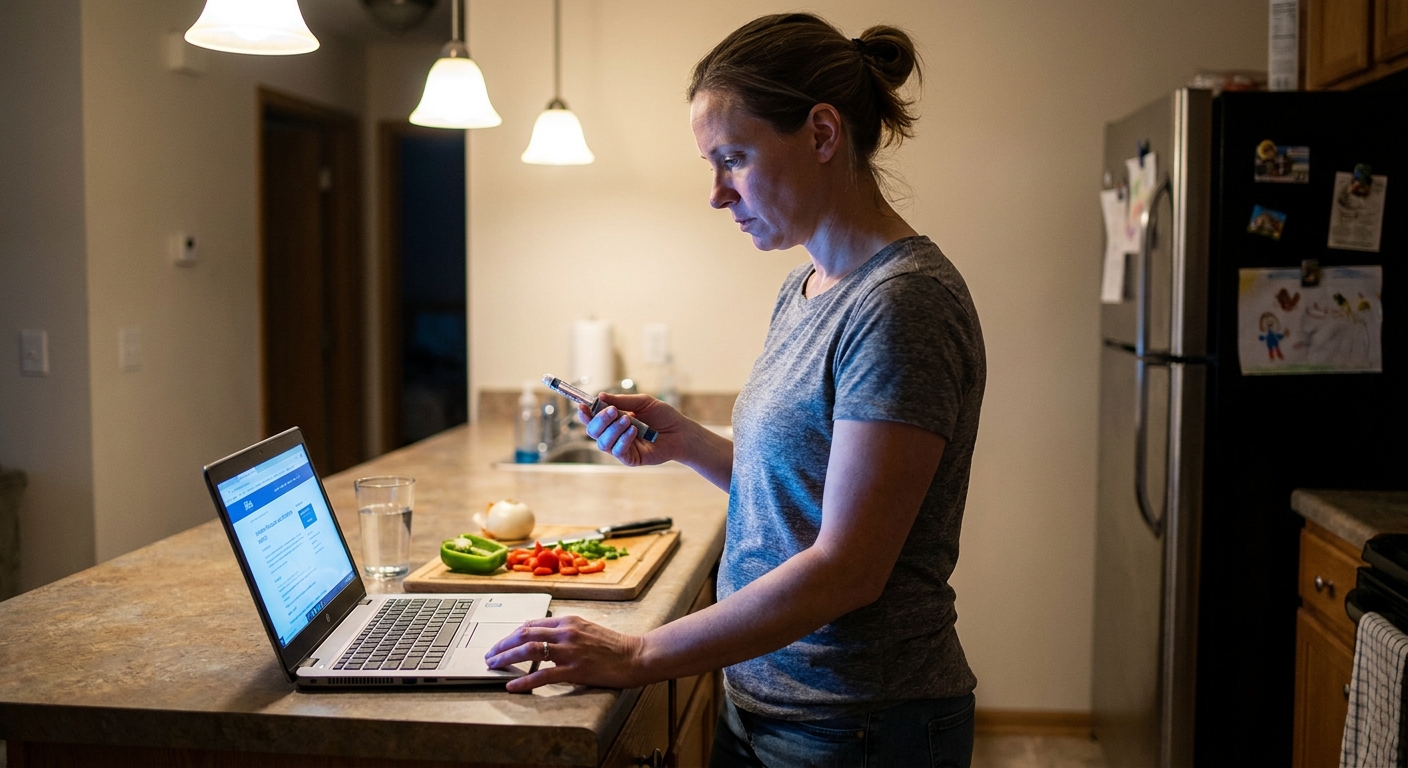
For people taking GLP-1 drugs such as Ozempic and Wegovy, the first change may not be a number on the scale. It can be the easing of the constant mental pull of food — a relief that reshapes ordinary decisions about eating, health and control. A Stanford Center for Digital Health qualitative study published in JAMA Network Open in 2026 examined how GLP-1 receptor agonist medications affect patients' daily psychological, social and behavioral experiences beyond the weight loss metrics tracked in clinical trials. The Stanford team interviewed 30 adults across the United States about their real-world experiences.
Patients describe these drugs as fundamentally reshaping their relationship with food — quieting relentless cravings and restoring a sense of control over eating. But who gets access to this relief is sharply divided by economics: insurance coverage gaps, thousand-dollar monthly price tags and employer restrictions mean wealth — not medical appropriateness — determines who receives treatment.
Again and again, patients described the drugs as quieting what they call "food noise" — the relentless inner stream of cravings, urges and preoccupations around eating. One patient said, "My whole world revolved around food." Before taking GLP-1 medications, patients described an almost frenzied pull to eat even when experiencing emotions like boredom or sadness rather than hunger. After starting the medication, the constant mental pull disappeared, allowing patients to feel clear-headed and regain agency. For many, the experience was about what life felt like when food was no longer in charge.
Patients described GLP-1 medications as creating distance between impulse and action, making healthier choices possible rather than serving as a magic solution. "Medications are not a standalone solution to obesity. Participants consistently described GLP-1s as a tool that enabled healthier behaviours rather than replacing them," said Dr. Isabella de Vere Hunt, lead author of the study and Academic Clinical Fellow in Primary Care at the University of Oxford and Affiliated Scholar at the Stanford Center for Digital Health. Patients actively rejected the idea that the drugs worked effortlessly, describing them as tools that opened room for change rather than delivering it on their own.
The room those drugs create can come at a physical cost. The study documented side effects including nausea, vomiting, diarrhea, constipation, bloating and abdominal discomfort, particularly early in treatment and at higher doses.
Then there is the judgment. Patients using GLP-1 medications for weight loss frequently experience intense stigma, shame and judgment, primarily because society views the drugs as a shortcut rather than legitimate medical treatment for obesity. A survey found that 76% of GLP-1 users report that stigma still surrounds the drugs despite their mainstream acceptance, and 69% believe others view the medication as a cheat code. Patients reported being accused of taking the easy way out, with one describing the stigma as being seen as a cop-out.
The judgment stems from a psychological bias known as effort moralization, where greater effort is equated with higher moral worth. Patients felt judged differently based on their prescription reason: GLP-1 use for diabetes was seen as legitimate, while use for obesity was framed as cheating. "I expected stigma but was surprised by how strongly it still emerged," said Dr. de Vere Hunt. Current eligibility criteria anchored to diabetes thresholds reinforce the idea that obesity alone is not a legitimate reason for treatment, intensifying that stigma.
For patients able to navigate the judgment, the more immediate obstacle may be price. Wegovy costs more than $1,300 per month without insurance; Ozempic runs roughly $950 to $1,000. Lack of insurance coverage for anti-obesity drugs is often the single greatest barrier to access, with only a minority of commercial plans covering Wegovy and government insurance generally excluding weight-loss indications.
Most private health plans are not required to cover medications used solely for weight loss, resulting in minimal coverage for drugs like Wegovy on ACA Marketplace formularies compared with broader coverage for diabetes-focused formulations like Ozempic. In 2026, approximately 36% of employers provide GLP-1 coverage for both diabetes and weight loss, while the majority exclude weight-loss-only coverage or restrict it to diabetes diagnoses. Only about 20% of large employers with 200 or more employees cover GLP-1 medications for weight loss alone.
A prescription does not guarantee sustained treatment. Only about one-quarter of GLP-1 users report their insurance covers the full cost, and more than half struggle to afford the drugs even when they are covered. Insurers have increasingly restricted coverage for weight loss, and approximately six million Americans lost coverage when policies were reshuffled in 2025. Insurers also employ prior authorization and step therapy requirements.
Medicare launched a new 18-month pilot program in 2026 to cover GLP-1 medications for obesity for the first time, though this is not yet universal coverage for all beneficiaries. Manufacturer pricing programs offer some relief, with cash-pay prices of $349 per month for Wegovy injection and $149 to $299 per month for oral formulations, though these remain financially prohibitive for many patients.
The study emphasizes that patients view GLP-1 medications as tools that create space for behavior change, underscoring the importance of clinical and psychosocial support. "GLP-1 RAs should always be embedded within ongoing, holistic weight-management care," said Dr. Fatima Rodriguez, associate director of the Stanford Center for Digital Health and co-author of the study. "GLP-1s can be a very powerful tool, but they're never the entire solution," said Dr. Rodriguez.
Quality of care proved highly variable, with patients reporting inconsistent provider guidance about side effects, nutrition counseling and long-term management plans. "Expanding access must go hand-in-hand with sustained investment in behavioural support and obesity prevention," said Dr. de Vere Hunt. GLP-1 drugs represent a genuine shift in treating chronic conditions, but unequal access determined by insurance coverage and cost raises urgent questions about how healthcare systems should support all the patients who need them.